Equipment page · Freezer / refrigeration

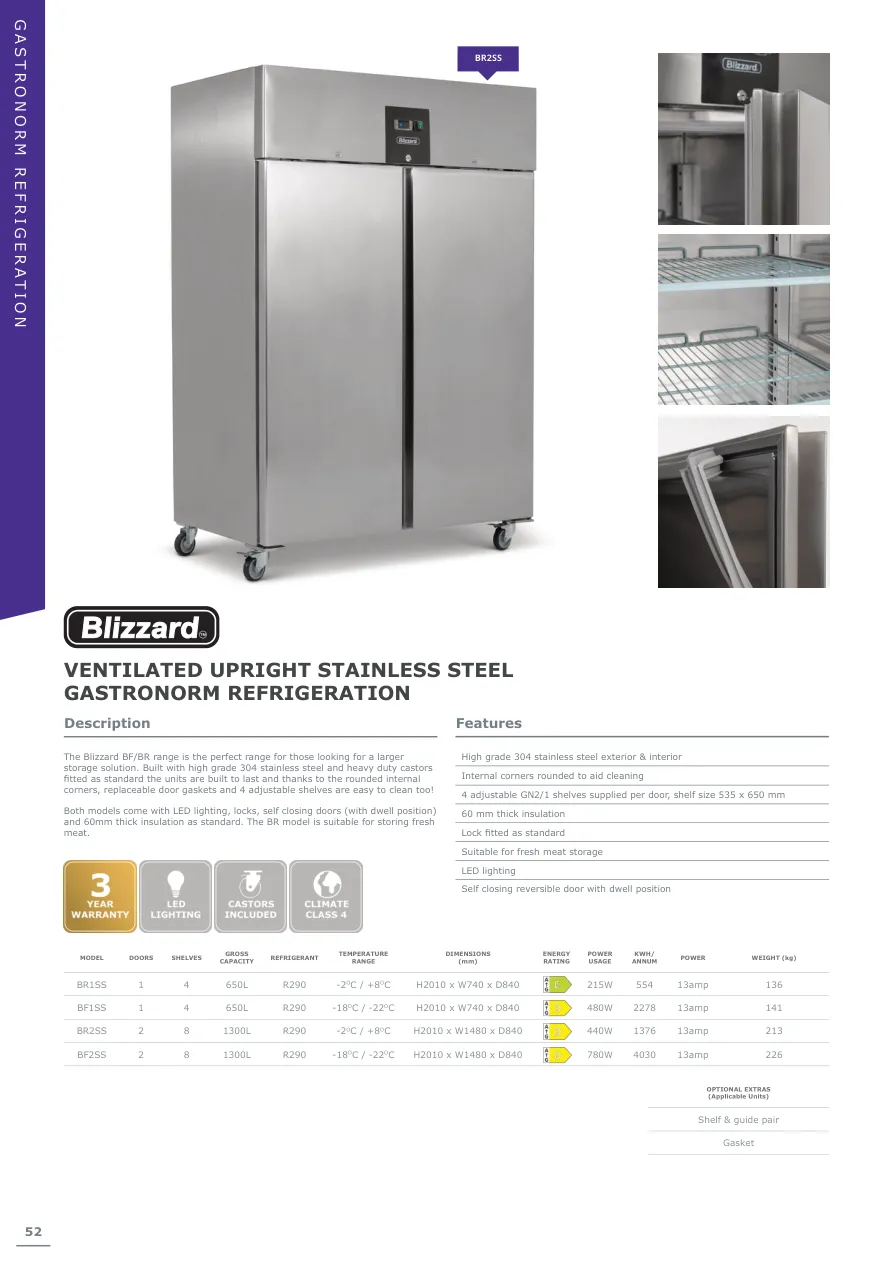
Blizzard BF1SS open-stock freezer

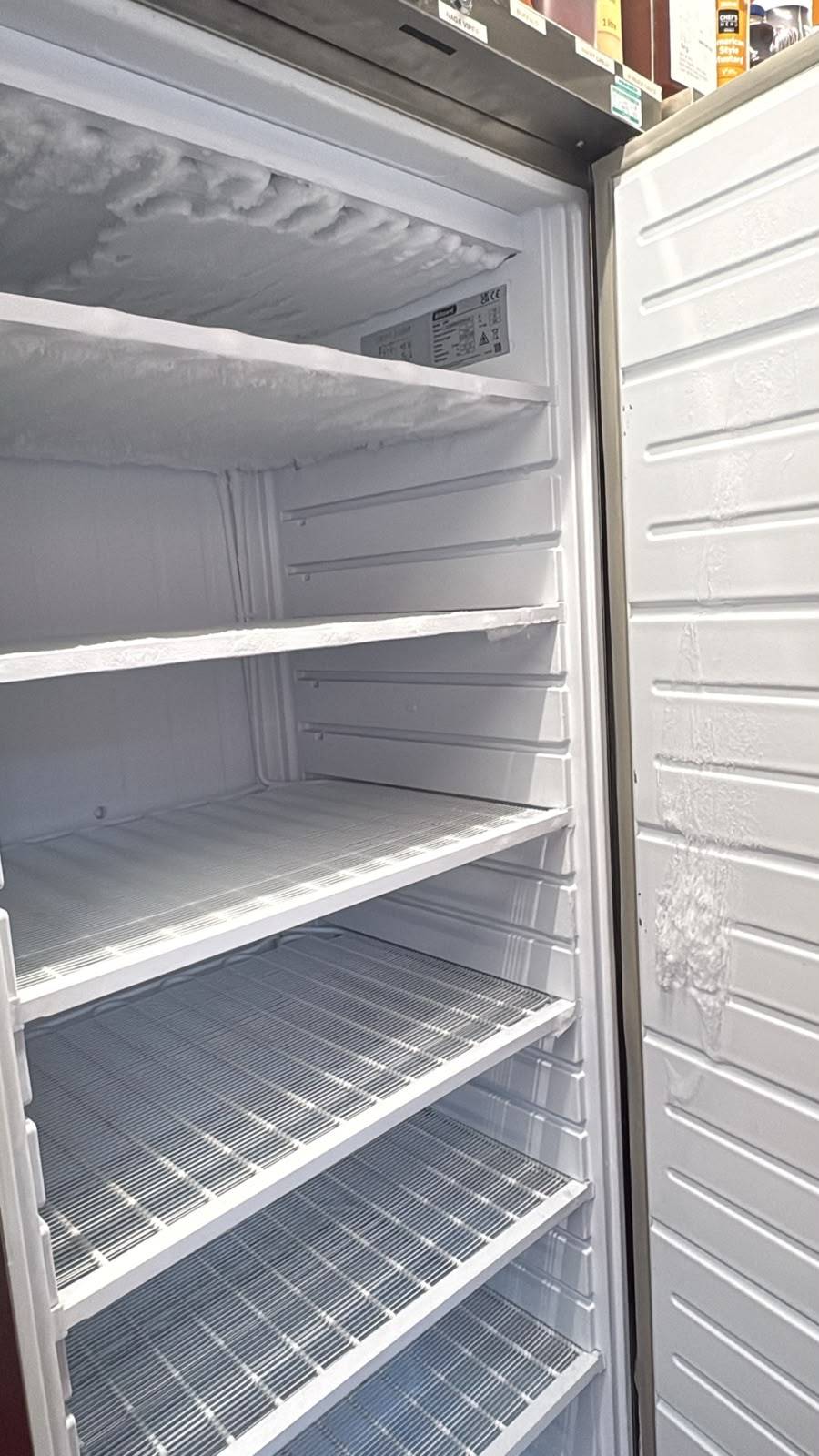
Dedicated troubleshooting page for the Bunk Derby freezer used for frequently cooked stock. After an overnight defrost it recovered to about -15°C, but it should normally operate around -18°C to -22°C. A replacement gasket has now been fitted, but frost is still forming at the upper side/top edge.

Venue
Bunk Derby
Location
Open-stock freezer / frequently used cooking stock
Make / model
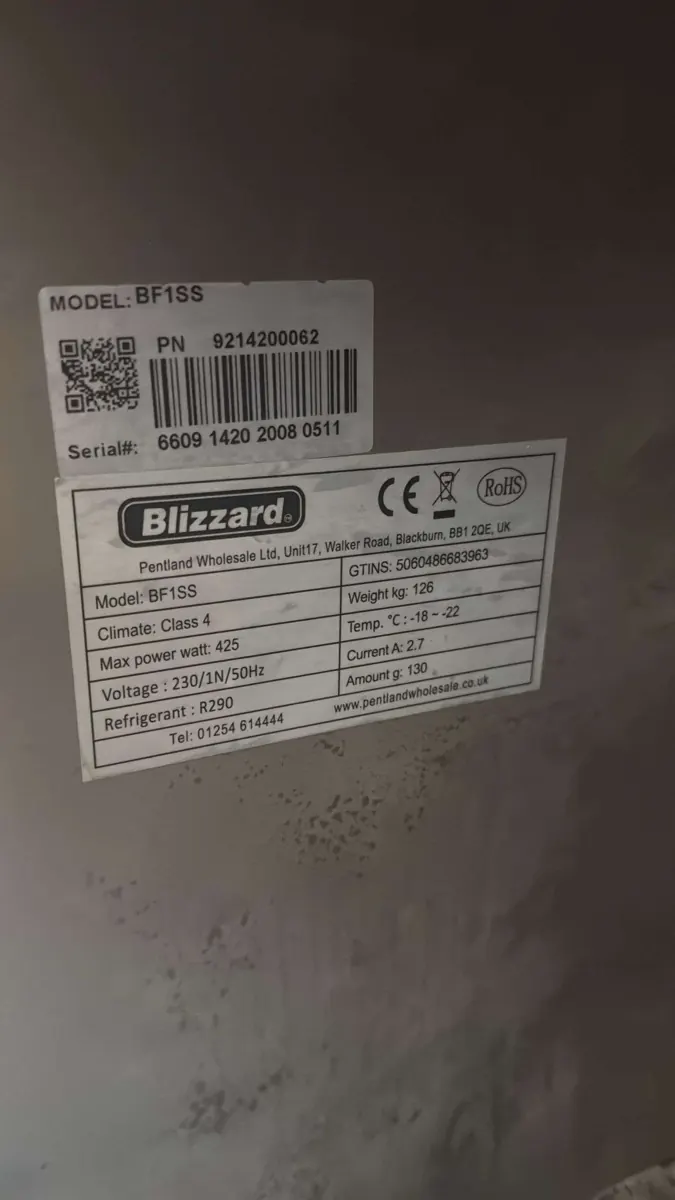
Blizzard BF1SS
Serial
6609 1420 2008 0511
PN
9214200062
Refrigerant
R290 · 130g
Rated temp range
-18°C to -22°C
Status
Open · not reaching target temp

Search this equipment page

Find checks, symptoms, manual notes, or handover text

Streamlined issue brief

Not reaching temperature · Blizzard BF1SS

Quick diagnosis for the open-stock freezer that recovered only to about -15°C.

OpenDefrost helped, but cabinet still above -18°C target range

1. Symptoms and evidence

  • Frequently opened freezer used for cooking stock.
  • After overnight defrost, temperature improved to about -15°C.
  • Rated range is -18°C to -22°C, so performance is still short.
  • Replacement gasket was fitted and reported to be the correct size.
  • 29 July photo shows frost returning along the upper internal edge and the door-side edge.

2. Suspects

  • Gasket lip not fully seated, twisted, folded or compressed unevenly after fitting.
  • Door/hinge alignment or a shelf/stock obstruction stopping full closure.
  • Gasket still cold/formed poorly after installation, or a distorted door/frame.
  • Frequent door opening and humid air entry through normal open-stock use.
  • Evaporator ice/airflow restriction, dirty condenser or poor ventilation.
  • Controller/probe or sealed-system issue if the seal and airflow checks pass.

3. Expand resources

Manual / how-to / error reference

BF1SS manual and product guide are saved on this page. Manual fault table lists ice, condenser dust, door seals, airflow, ambient heat, overloading and fan blockage.

Troubleshooting tests
  1. Confirm set point around -19°C.
  2. Run closed-door pull-down test with reduced stock.
  3. Compare display with independent thermometer.
  4. Clear fan vents and clean condenser.
  5. Warm the new gasket gently with warm (not hot) air/water, wipe it clean and check it sits flat in the channel.
  6. Paper-test the gasket at the top corners, hinge side, handle side and bottom; repeat with the door closed and latched.
  7. Check the door closes by itself and no shelf, basket or stock is touching the seal.
  8. After a complete defrost, monitor exactly where frost returns and how quickly.
Diagram / parts / sources

No specific replacement part chosen yet. Parts depend on test result: gasket, fan, controller/probe, condenser fan, or refrigeration engineer repair.

4. Updated solution/status

Open: troubleshoot usage/airflow/condenser/gasket first; call refrigeration engineer if it still cannot reach -18°C when lightly loaded and closed.

Issue history for this freezer

Choose the problem type

This is the dedicated equipment page for the Bunk Derby Blizzard BF1SS. Future repeat faults should be added here as separate issue branches.

Open · 2026-05-26 · updated 2026-07-29

Not reaching target temperature / frost returning after gasket replacement

After overnight defrost, cabinet reached about -15°C rather than -18°C to -22°C. A new correctly sized gasket has since been fitted, but slight frost is visible at the side and top. The immediate priority is to prove the new seal is making continuous contact before ordering more parts.

Open troubleshooting log

Open · updated 2026-07-29

Frost after replacement door gasket

New gasket reported correct size, but frost is visible at the upper side/top edge. Check seating, warm-forming, door alignment, obstructions and continuous contact around the full perimeter.

Open gasket checks

Evaporator fan / airflow

Check if shelves/stock block internal fan or if ice returns on evaporator.

Condenser / ventilation

Check monthly condenser clean and rear/side airflow.

Controller / probe

Confirm set point and compare display against independent thermometer.

Sealed system

Engineer-only if all basic checks pass and it still will not pull down.

Current issue log · Not holding target temperature

Practical troubleshooting sequence

1Confirm set point: hold set for 3 seconds, check target is around -19°C, then save and wait.
2Run a clean pull-down test: empty/low stock, door closed for 2–4 hours, log display every 30 minutes.
3Check airflow: do not overload shelves, keep fan vents clear, leave gaps around stock and rear wall.
4Check condenser/ventilation: clean dust from condenser and ensure heat can escape around the unit.
5After gasket fitting, run the paper/torch test around the full perimeter and check door alignment, hinge, shelves and stock.
6If still stuck around -15°C, check evaporator fan/ice pattern, probe accuracy, then call engineer.
Current interpretation

Defrost helped but did not fully solve

  • The freezer improved after a full overnight defrost, which suggests ice/airflow may have been part of the fault.
  • Only reaching -15°C means it is still above the rated -18°C to -22°C freezer range.
  • Because this is frequently opened for cooking stock, door-open load and warm product loading may be contributing.
  • If it cannot reach target when mostly empty with the door closed, suspect condenser, fan, gasket, probe/control, or refrigeration performance.

Best next test: run a closed-door pull-down test with stock reduced and vents clear, then compare display with an independent freezer thermometer.

New gasket follow-up · 29 July 2026

Why frost can remain after a correct-size gasket is fitted

  • New seal not seated: the retaining lip can sit partly outside the channel, or the gasket can be twisted at a corner.
  • Needs forming: gently warm the gasket with warm water or a hairdryer on low, then close the door so it moulds to the frame. Do not overheat it.
  • Door alignment: a sagging hinge, uneven cabinet or damaged frame can leave a gap even with a perfect gasket.
  • Obstruction: shelves, trays, stock labels or ice on the frame can prevent the door closing fully.
  • Paper test: check several points, especially the two top corners and hinge side. Resistance should be consistent; a loose section identifies the leak.
  • Frost location: frost immediately beside the seal suggests warm-air entry; a broad, even evaporator frost pattern may be normal. Frost returning as a solid block points to airflow/defrost or refrigeration faults.

Controlled next step: fully defrost and dry the cabinet, clean the gasket and frame, form the seal, then leave the door closed and lightly loaded overnight. Photograph the first frost location and log the temperature. If one section fails the paper test, refit/adjust the gasket or door before investigating the sealed system.

Safety

Do not scrape or puncture

Do not chip ice with a knife, use a heat gun, or remove panels. The freezer uses flammable R290 refrigerant. If the gasket still leaks after refitting or the evaporator quickly becomes a solid ice block, remove from service and use a qualified refrigeration engineer.

Typical causes to check

Most common reasons a commercial freezer stalls around -15°C

  • Door opened too often: open-stock/freequently used freezers may struggle during busy periods. Check overnight closed-door temp separately.
  • Overloaded shelves: stock too close to the fan/rear wall blocks cold-air circulation.
  • Warm stock loaded: adding warm/ambient food makes the cabinet recover slowly.
  • Ice on evaporator: manual says too much evaporator ice can cause high/low temperature faults.
  • Dirty condenser: manual says a dust-blocked condenser can cause temperature faults; monthly cleaning is recommended, especially in warm kitchens.
  • Interrupted condenser airflow: unit too close to wall, boxed in, next to heat source, or poor ventilation.
  • Door not sealing: damaged gasket, hinge sag, door not closing fully, shelf/stock obstruction.
  • Evaporator fan problem: fan not spinning, blocked by ice, or airflow path restricted.
  • Controller/probe issue: display may be inaccurate; compare with an independent thermometer in a cup/box of frozen goods.
  • Sealed-system issue: low refrigerant/compressor/capillary fault if clean, defrosted, unloaded and ventilated but still cannot reach range.

Priority order

What I’d try first

  1. Check controller set point is actually -19°C.
  2. Run overnight/closed-door test with a thermometer inside.
  3. Reduce stock load and keep fan vents clear.
  4. Clean/check condenser and ventilation clearance.
  5. Check door seal, hinge and paper test.
  6. Inspect evaporator/fan for ice returning quickly.
  7. If still no improvement, book refrigeration engineer.

Open-stock usage advice

How to separate usage load from a real fault

  • Closed-door baseline: record temperature before service after being closed overnight.
  • Busy-period reading: record lowest/warmest display during peak use.
  • Recovery time: after busy use, door closed — it should pull back down steadily.
  • Stock rotation: keep a smaller working quantity in this freezer and store backup stock in a less-opened freezer.
  • Do not block fan: leave a visible air path around fan grille and rear wall.
  • Door discipline: open once, take several items, close fully; avoid standing with door open.

When to stop DIY checks

Call an engineer if…

  • It cannot reach -18°C when empty/low stock and closed.
  • Evaporator becomes a solid block of ice again quickly.
  • Condenser fan/compressor sounds abnormal or runs constantly hot.
  • Door seal is fine but cabinet still stalls at -15°C.
  • Error codes appear on the controller.

Evidence photos

Photos from Bunk Derby

Photos confirm the make/model label, observed temperature readings after defrosting, and the frost pattern after the replacement gasket was fitted.

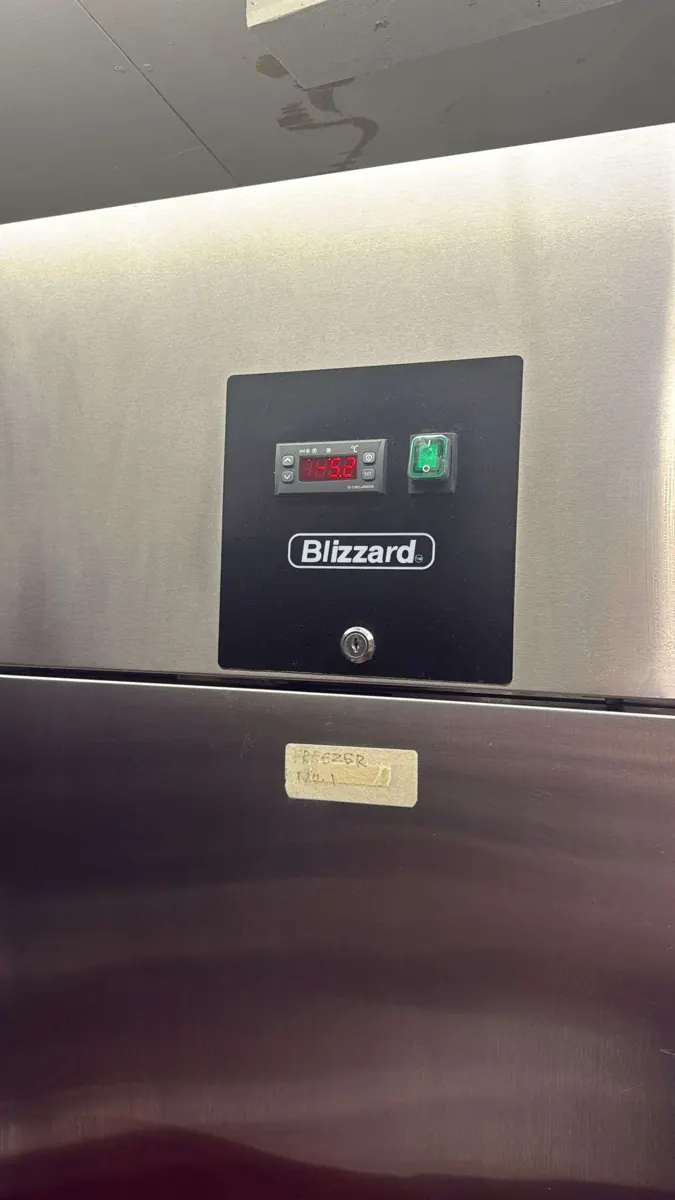
Blizzard BF1SS control display showing -5.2°C
Controller photo during recovery / warm reading: about -5.2°C.
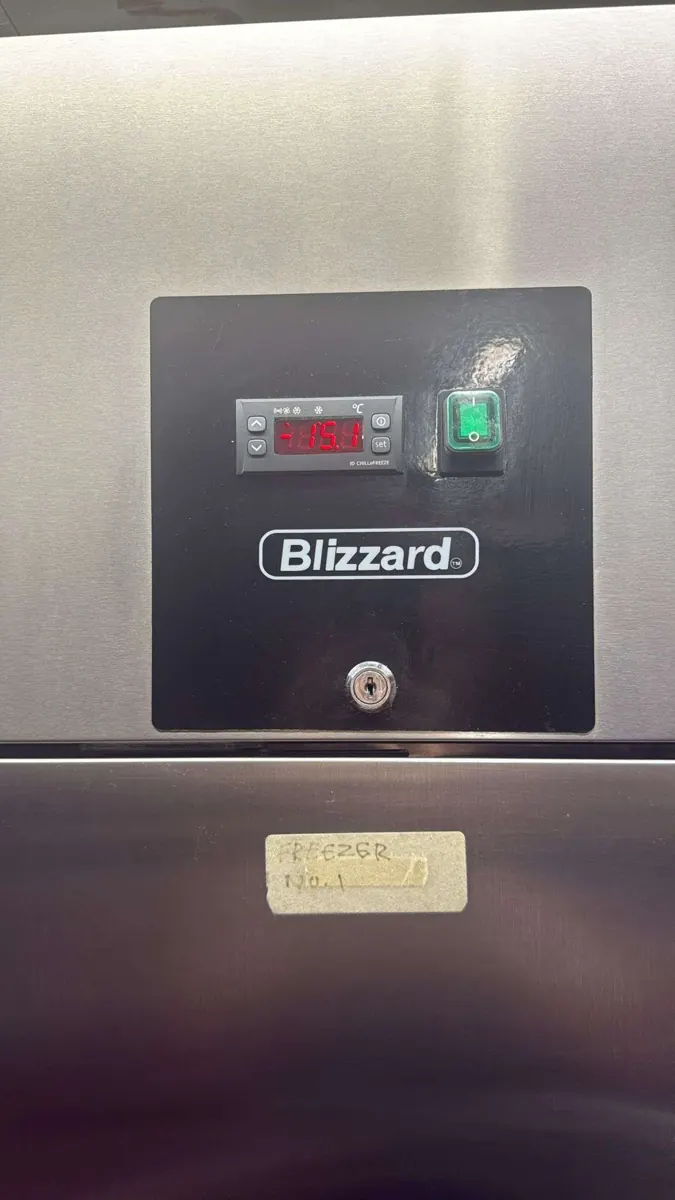
Blizzard BF1SS control display showing -15.1°C
After overnight defrost, cabinet reached about -15.1°C.
Blizzard BF1SS rating label
Rating label: Blizzard BF1SS, serial 6609 1420 2008 0511, R290 130g, -18°C to -22°C.
Frost along the upper side and top inside edge of Blizzard BF1SS after replacement gasket fitted
29 July 2026: frost still forming at the upper side/top edge after a replacement gasket was fitted.

Manual / reference found

Blizzard BF1SS manual and product guide

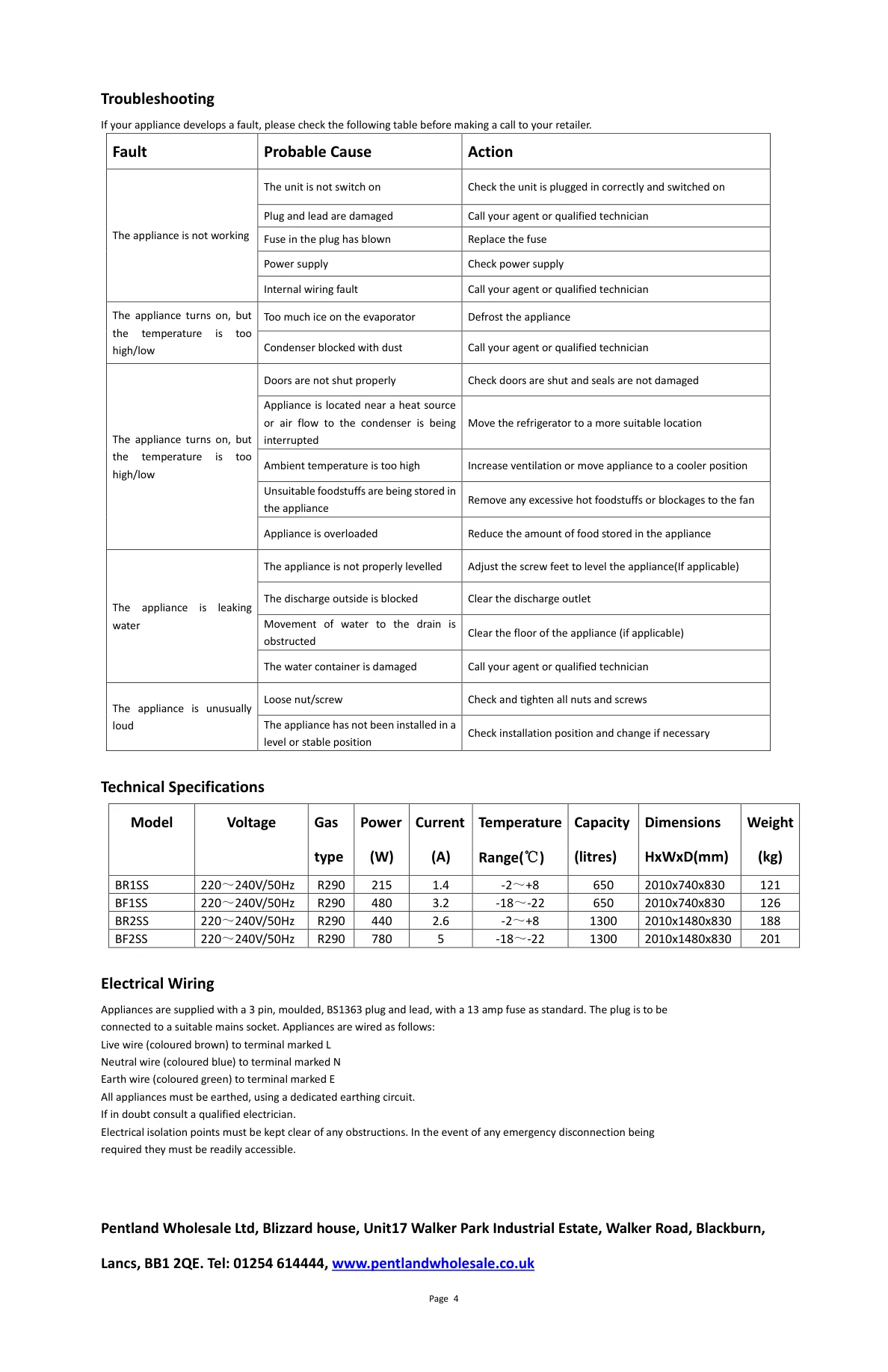
I found the public BF1SS manual and product guide. The manual confirms the temperature range and lists common causes for “appliance turns on, but temperature is too high/low”.

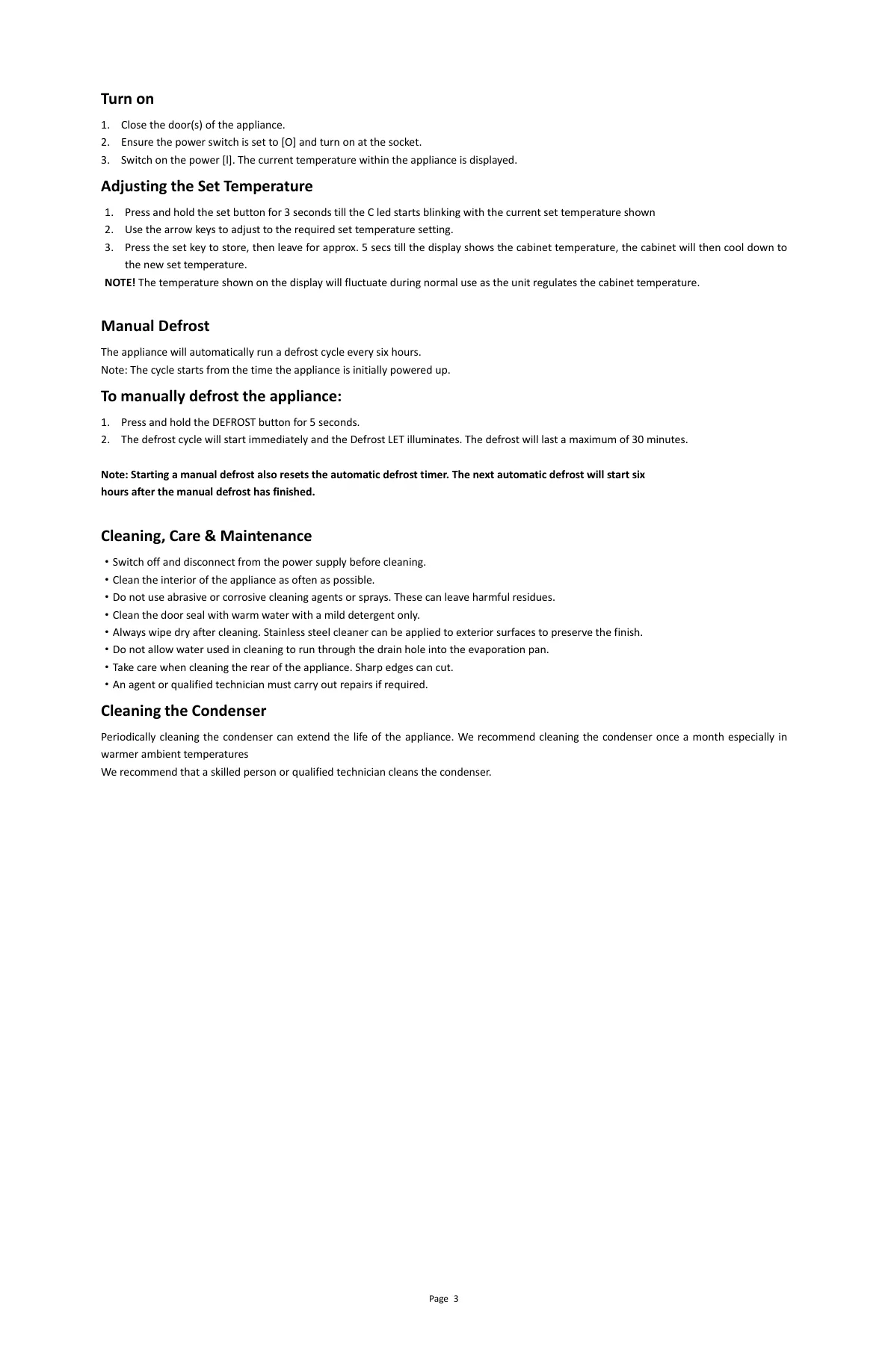
MANUAL

Blizzard BF1SS manual

Includes set temperature instructions, manual defrost, condenser cleaning guidance, troubleshooting table and R290 safety warnings.

Open saved manual PDF Source: Blizzard Equipment public download.
GUIDE

BF1SS product guide

Confirms BF1SS as 650L ventilated GN freezer, R290, -18°C / -22°C, 2010 × 740 × 840mm, 13amp supply.

Open saved product guide PDF Source: Pentland Wholesale public download.
MANUAL NOTES

Manual fault table says check

Too much evaporator ice, condenser blocked with dust, doors not shut/seals damaged, heat source, interrupted condenser airflow, high ambient, unsuitable/hot food, overloaded cabinet, and blocked fan airflow.

Use this list before assuming sealed-system fault.
BF1SS manual page showing temperature and defrost instructions
Manual page: set temperature, manual defrost and condenser cleaning.
BF1SS manual page showing troubleshooting table
Manual page: troubleshooting table and technical specs.
BF1SS product guide page
Product guide: BF1SS range, size and temperature specification.

Copy/paste handover

Message for staff or refrigeration engineer

Use this when asking someone on site or an engineer to investigate.

Bunk Derby open-stock freezer issue — updated 29 July 2026.
Equipment: Blizzard BF1SS upright freezer, serial 6609 1420 2008 0511, PN 9214200062, R290 130g, rated -18°C to -22°C.
History: after overnight defrost it improved to about -15°C but did not reach the -19°C target. A new correctly sized door gasket was then fitted; slight frost is still forming at the side and top edge, shown in the 29 July photo.
First check: fully defrost and dry, clean the frame and gasket, gently warm/form the gasket, confirm its retaining lip is seated and run a paper test at all four sides and both top corners. Check door/hinge alignment and obstructions. Then run a closed-door pull-down test with vents clear and stock reduced, compare display with an independent freezer thermometer, confirm evaporator fan/internal airflow, clean/check condenser and ventilation clearance, and inspect whether frost returns quickly. Manual lists common causes as too much evaporator ice, blocked condenser, damaged seals/doors not shut, heat source or interrupted condenser airflow, high ambient temperature, hot/unsuitable foodstuffs, overloaded cabinet, and blockages to fan airflow. If the seal passes but it still stalls around -15°C, refrigeration engineer to investigate compressor/sealed-system/control/probe fault. R290 flammable refrigerant — sealed-system work by qualified engineer only.